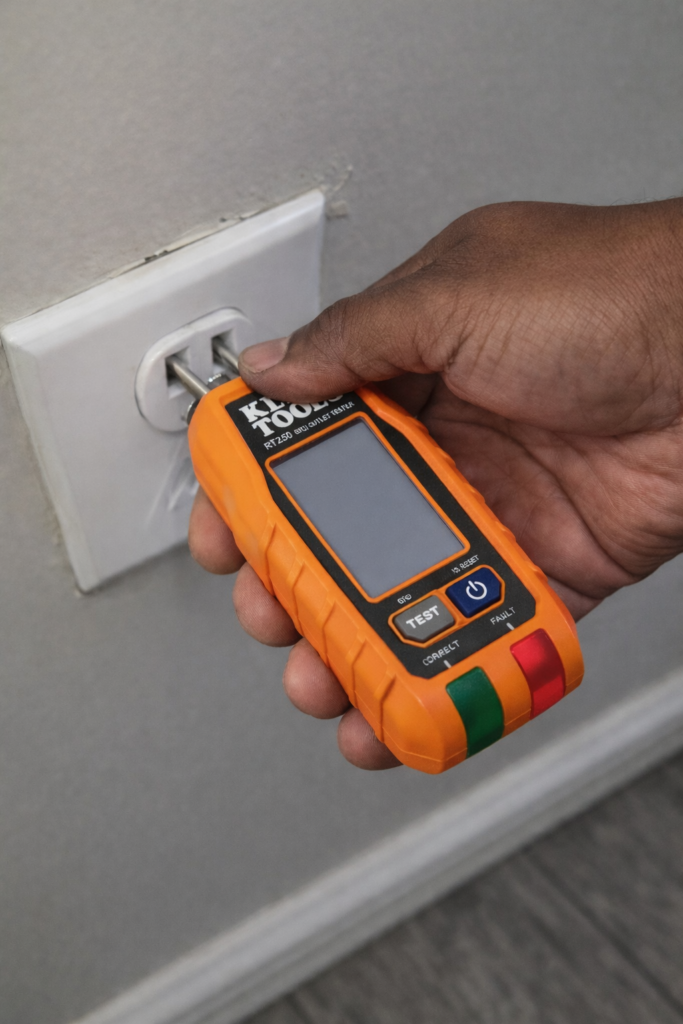
Outlet with no power being tested by an LCD display voltage tester
If an outlet suddenly stops working, it can be frustrating — and sometimes concerning.
The good news is that many outlet issues are caused by simple, beginner-safe problems like a tripped GFCI outlet or breaker. However, some electrical issues are dangerous and should never be ignored.
This guide walks through what homeowners can safely check first — and how to know when it’s time to stop and call a licensed electrician.
Beginner-Safe Things to Check When an Outlet Isn’t Working
- 1. Check Nearby GFCI Outlets
Some outlets are protected by a GFCI located in another room, such as a bathroom, kitchen, garage, or basement. Press the “Reset” button firmly and see if power returns.
Some outlet issues are caused by a tripped GFCI. If pressing reset doesn’t work, see GFCI won’t reset for beginner-safe troubleshooting.
- 2. Check the breaker panel
A tripped breaker may not look fully off. Flip the breaker fully to OFF, then back to ON. If the breaker trips again immediately, stop and contact an electrician.
- 3. Test another device
Plug in a lamp or phone charger to confirm the outlet itself isn’t the issue. Sometimes the device, not the outlet, is the problem.
- 4. Know when to stop
Burning smells, buzzing sounds, warm outlets, flickering power, or scorch marks are warning signs. Stop immediately and contact a licensed electrician if you notice any of these.
If the outlet problem is related to a tripped breaker, see our guide on breaker keeps tripping to understand common causes and safety warnings.
Tools That Make Outlet Troubleshooting Safer
You don’t need advanced tools to perform basic outlet checks, but a few simple items can help you troubleshoot more safely and confidently.
For a full list of beginner-safe tools, see our recommended electrical tools for homeowners.
- Non-contact voltage tester — helps confirm whether power is present without touching wires
- Outlet tester — quickly checks for common wiring and grounding issues
- Flashlight — improves visibility when checking outlets, panels, or reset buttons
Always turn off power at the breaker before removing outlet covers or touching any electrical components. Tools reduce risk, but they do not eliminate it.
When an Outlet Problem Requires a Licensed Electrician
If the outlet still doesn’t work after basic checks, the issue may be inside the wall or related to wiring. These problems are not beginner-safe and should be handled by a licensed electrician.
Frequently Asked Questions
Why did only one outlet stop working?
Often the outlet is protected by a GFCI or connected to another outlet upstream that lost power.
Can a bad outlet cause other outlets to stop working?
Yes. Many outlets are wired in sequence, so a failure in one can affect others.
Is it safe to replace an outlet myself?
Outlet replacement is not recommended for beginners. This guide focuses on inspection and testing only.
When should I call an electrician for an outlet problem?
Call a professional if the outlet feels warm, smells burnt, or still doesn’t work after basic checks.
Want a Full Beginner-Safe Electrical Guide?
This page covers the most common checks for a single outlet problem.
If you’d like a complete beginner-safe breakdown of common electrical issues — with clear explanations, safety warnings, and guidance on when to stop — the DIY Electric Guide goes deeper into outlets, breakers, GFCIs, and more
New to electrical troubleshooting? Start with our Start Here guide for beginner-safe explanations.